
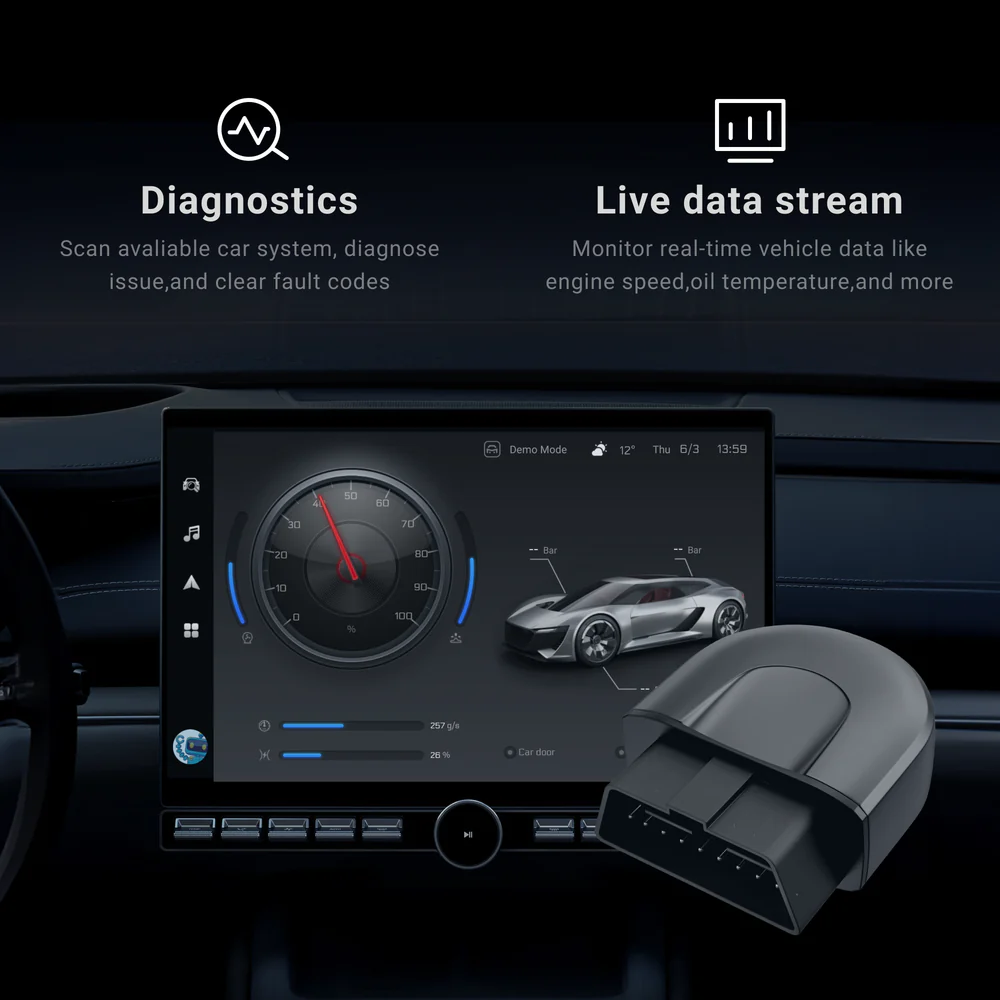
Have you ever wondered how your car can alert you to engine troubles or emissions issues before they become major problems? This is all thanks to On-Board Diagnostics, or OBD. Whether you're a car owner wanting better insight into your vehicle’s health or an Android head unit user seeking richer data integration, understanding OBD is crucial. In this guide, you'll learn what OBD is, how it evolved, how it works, and why it matters for maintaining your vehicle efficiently and compliantly.
What is OBD? Understanding On-Board Diagnostics
On-Board Diagnostics (OBD) is a standardized system in vehicles designed to monitor and report the performance of various vehicle subsystems. Its primary purpose is to detect malfunctions, particularly those that affect emissions, and communicate this information to the driver or mechanic. Modern vehicles rely heavily on OBD to provide real-time data on engine performance, fuel efficiency, and emissions, making it an indispensable tool for automotive diagnostics and maintenance.
The importance of OBD lies in its ability to quickly identify and pinpoint the source of trouble, reducing guesswork during repairs and helping prevent costly breakdowns. It empowers drivers with early warnings through dashboard indicators like the Check Engine Light, while mechanics rely on OBD data to perform accurate diagnostics.
An OBD system consists mainly of sensors embedded throughout the vehicle to monitor parameters such as oxygen levels, temperature, and engine speed. These sensors feed data to the Electronic Control Unit (ECU), which assesses the information and, when irregularities are detected, generates Diagnostic Trouble Codes (DTCs). The OBD interface is accessed through a standard port, enabling communication between the vehicle’s computer and external diagnostic tools or smartphone apps.
Through this interface, drivers can use handheld scanners or connected devices to read data, reset alerts, or monitor vehicle conditions in real-time. This system bridges the gap between drivers, mechanics, and technology, making car maintenance more transparent and manageable.
For example, using an android head unit or compatible car data monitor connected to the OBD port allows you to keep a constant eye on your vehicle’s operational metrics, enhancing safety and performance awareness. You can also explore solutions like how Superbox works with Dashmate to monitor car data for integrated diagnostics and monitoring.

How OBD Works in Vehicles
OBD systems function through an intricate network of sensors connected to the vehicle’s Electronic Control Units (ECUs). These sensors continuously monitor engine parameters like temperature, airflow, oxygen levels in exhaust gases, and fuel injection. The ECU processes this data to optimize vehicle performance and ensure emissions stay within legal limits.
The centerpiece for interfacing with the OBD system is the standardized OBD-II port, usually located under the dashboard. This port supports multiple communication protocols including the Controller Area Network (CAN) bus, which allows various ECUs and diagnostic tools to exchange information efficiently.
When a sensor detects a fault or data outside specified ranges, the ECU generates a Diagnostic Trouble Code (DTC). These codes are stored in the system and can trigger indicators such as the Check Engine Light. DTCs not only signal a problem but also provide a specific code that points to the underlying cause, facilitating timely and accurate repairs.
Mechanics and vehicle owners use diagnostic tools—ranging from handheld scanners to smartphone apps—that connect to the OBD port. These devices read DTCs and present the data in an understandable format, allowing users to identify engine faults, emissions issues, or other system malfunctions. Many modern diagnostic apps also offer the ability to reset alerts or monitor engine parameters live, empowering drivers with proactive vehicle management.
For example, with Superbox, you can view it using your car's infotainment system or your phone.

Key Components of an OBD System
| Component | Function |
|---|---|
| Sensors | Collect real-time data on engine and emissions parameters |
| Electronic Control Unit (ECU) | Processes sensor data and monitors vehicle systems for faults |
| OBD Connector (Port) | Standardized interface for communication between vehicle and diagnostic tools |
| Diagnostic Tools (Scanners, Apps) | Retrieve and interpret trouble codes and system data for users and mechanics |
Each component's role is critical: sensors gather vital information; the ECU acts as the brain analyzing data; the connector enables external access; and diagnostic tools deliver actionable insights. Together, they form a comprehensive diagnostic ecosystem that supports both routine maintenance and complex repairs.
Common Diagnostic Trouble Codes (DTCs) Explained
Diagnostic Trouble Codes (DTCs) are standardized identifiers used by OBD systems to specify vehicle malfunctions. These codes help you understand what part or system may be failing, providing a starting point for diagnosis and repair.
Common DTC examples include P0300, which indicates random or multiple cylinder misfires; P0171, signaling a lean fuel mixture in the engine; and P0420, relating to catalyst system efficiency below threshold. These codes are critical because they translate complex mechanical issues into simple codes for easier troubleshooting.
Understanding DTCs lets drivers and mechanics decide on the urgency and type of repair needed. For instance, a persistent P0300 might require urgent attention to prevent engine damage, while some codes related to minor emissions issues could be addressed during scheduled maintenance. Accessing and interpreting these codes can save time and reduce repair costs, enabling smarter vehicle upkeep.
Benefits and Use Cases of OBD Systems
OBD systems offer numerous benefits that enhance vehicle ownership and management. Foremost, they aid in preventive maintenance by providing early warnings about potential issues, helping you avoid costly repairs caused by neglect or delayed diagnosis.
Beyond maintenance, OBD is crucial for emissions monitoring, ensuring your vehicle complies with environmental regulations. This advantage supports cleaner air and keeps you legally compliant in regions with emissions testing requirements.
User convenience is another key benefit. With real-time data available through various devices—such as car data monitors or android head units equipped with compatible OBD apps—you can track vehicle performance at any time. This capability supports do-it-yourself diagnostics and promotes better understanding of your car’s health.
For professionals and fleet operators, OBD enables advanced telematics, vehicle tracking, and management tools that improve operational efficiency and safety. Whether for personal use or commercial purposes, leveraging OBD data empowers smarter driving habits and better vehicle utilization.
Blog Test two0 iLuancher Theme Promo